




The Chevy Blazer vs Blazer EV: Which Is Right for You?
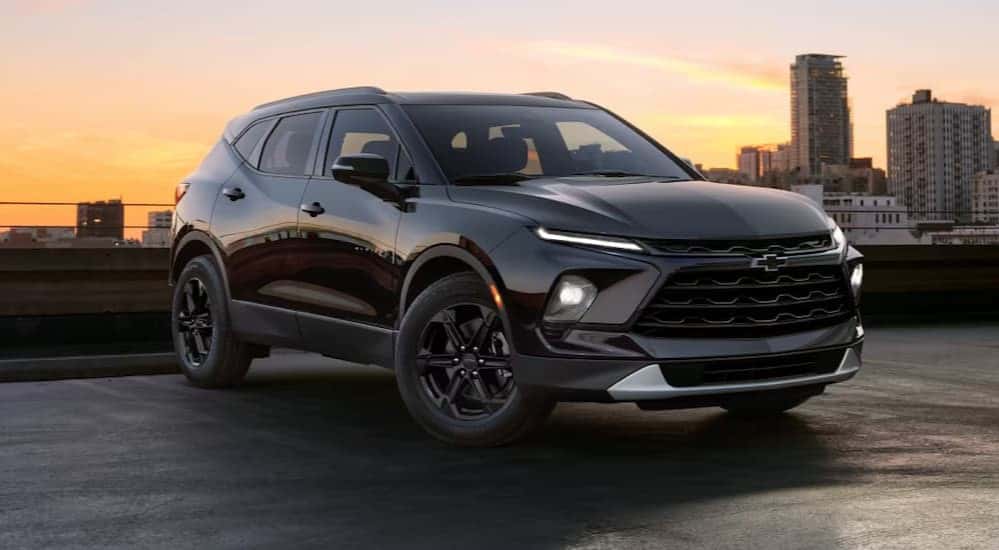
The Chevy Blazer midsize crossover is one of the most successful vehicles in its segment, giving drivers sporty style and performance for everyday driving or special outings. Now, prospective buyers have the choice of gas or electric power for their driving adventures. Parks Chevrolet Charlotte has the Chevy Blazer for sale in traditional and EV (electric vehicle) form, giving people even more choices when buying their next vehicle.
The differences between the Blazer and Blazer EV go beyond the power source. There are stark variations in powertrain specs, interior layout, and more. One Blazer isn’t necessarily better or worse than the other overall, but they do serve different needs, so it’s important to select the vehicle that best suits you. This guide puts the traditional Chevy Blazer and the Chevy Blazer EV side by side to show how each can be the perfect vehicle for how and where you drive.
Performance: A Solution for All Drivers
The vibe of the Chevy Blazer begins with its powertrain, which includes multiple choices on both models. Each has options for people who mainly do around-town cruising or like feeling a little Camaro spirit from their crossover. The base engine on the traditional Blazer is a turbocharged 2.0L that’s fine for daily driving; the optional V6 exceeds 300 hp, which gives you some pop on the highways and interstates.
The Blazer EV does offer a little more oomph. The intro setup on the Blazer is closer to the top powertrain option on the traditional Blazer, while the high-output electric motor reaches 365 hp. There’s also a Blazer EV SS that tops 615 hp, which speed demons will surely appreciate. On the other hand, the traditional Blazer has a better towing capacity, maxing at 4,500 lbs, beating the EV’s 3,500-lb capacity. This will help you haul your adventure essentials for a day of fun in the Great Outdoors.
So if you want to go all-out while behind the wheel, the Blazer EV is your choice. If you like towing boats, powersports vehicles, and small campers, the traditional Blazer will fare better. For the average driver or even the moderate performance enthusiast, though, there are enough choices that you can’t go wrong with either vehicle.
Efficiency vs Convenience
This may be the biggest debate when it comes to traditional gas-powered vehicles and EVs, and it continues with the Chevy Blazer. There’s no denying the Blazer EV is a more efficient vehicle. Using the 2025 model for comparison, the Blazer EV gets an EPA-estimated 104 MPGe combined, and even the souped-up Blazer EV SS is rated for 85 MPGe. Conversely, the “classic” Blazer ranges from 22 to 25 MPG combined depending on the configuration—great for the segment, but trailing its EV sibling.
However, the gas-powered Blazer can go a lot farther between stops. Its range on a full tank of gas exceeds 521 miles in some circumstances, whereas for the Blazer EV, its best EPA-estimated range is 334 miles. Although the Blazer EV has excellent fast charging, adding up to 78 miles of range in 10 minutes, it will still take longer to “fuel up.” Those extra, longer stops add up for frequent travelers.
Furthermore, there’s the availability of fill-up/charging options. The greater Charlotte area has over 1,500 public EV charging stations, about 18% of which have Level 3 capabilities. So when you’re driving around the city, it’s easy to find a place you can plug in. However, longtime North Carolina residents know you don’t have to travel far before you reach areas with much less EV infrastructure. This can mean sitting in long lines to recharge—or worse, not being able to. You may prefer the traditional Blazer because of the greater gas station availability, reducing waiting times and stress.
Interior Space and Connectivity
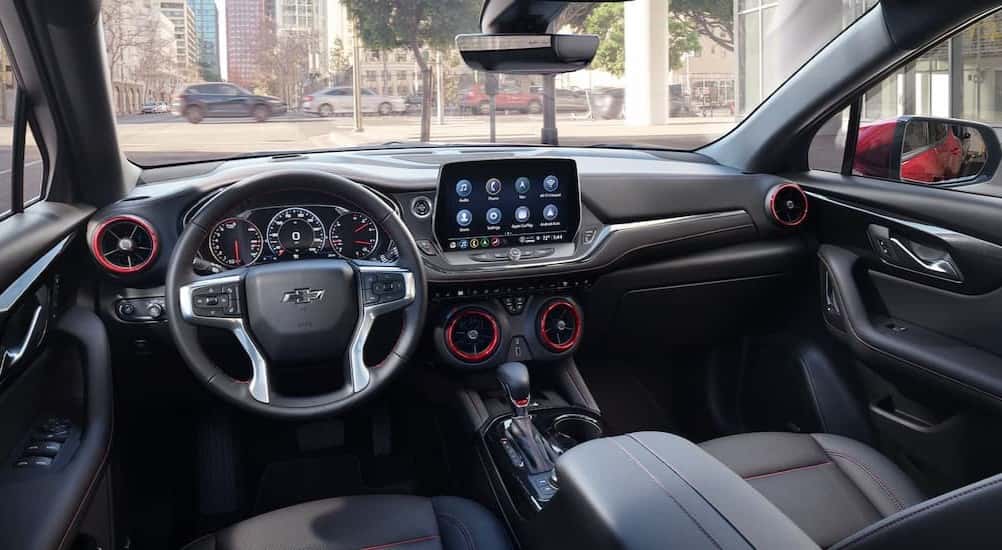
Two other things to consider are the size of the vehicle and the tech included, as both contribute to the comfort, safety, and “fun factor.” They share the Blazer name, but these vehicles are built on different GM platforms, which means distinct measurements. In this category, the Blazers battle to a split decision.
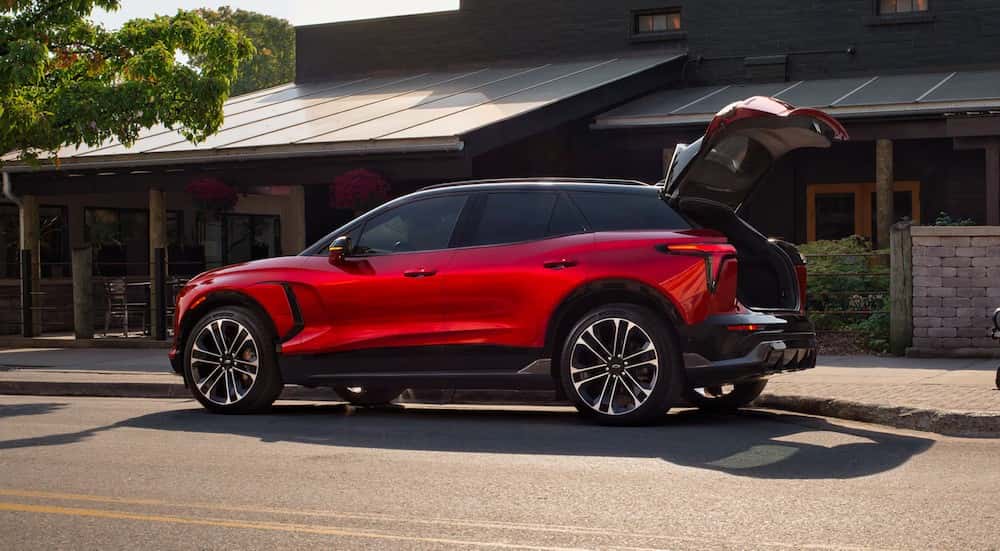
The Blazer EV has significantly more first-row legroom at 44.2 inches vs 41 inches, meaning tall adults will be more comfortable in the front. However, the traditional Blazer has slightly more second-row legroom (39.6 vs 38.9 inches), and it also has more cargo room at 64.2 vs 59.1 cu.ft. This furthers the traditional Blazer’s positioning as being an ideal road-trip vehicle for family and friends.
As for tech, the most notable difference also comes down to size; that is, the size of the screens. The Blazer EV has a 17.7-inch infotainment touchscreen across the board, while recent gas-powered Blazers have a 10.2-inch screen. Some people will love the huge screen in the Blazer EV, while others may find it cumbersome.
Also, the traditional Blazer has wireless Android Auto and Apple CarPlay, whereas the Blazer EV replaces this with Google built-in. This again comes down to personal preference and which you find more useful. The final major distinction is that the Blazer EV is available with GM Super Cruise semi-autonomous highway driving software for compatible North American roads.
Driving Familiarity and Affordability
The Blazer EV is the new kid on the block, and it has some undeniable upsides, such as the impressive power of the SS and its higher efficiency. That said, if you’re new to EVs, it will take some time to get used to them. Between the one-pedal driving, plugging in to charge, adding Super Cruise, and a different control layout, there will be an adjustment period. Some people find that adjustment worth it for the amenities, but others want to get in and go. The traditional Blazer lets you do the latter and start enjoying your new ride.
There’s also no disputing that the traditional Blazer is a more budget-friendly vehicle. A new Blazer 2LT introductory model starts at almost $10,000 less than a Blazer EV, at $35,600, with similar price gaps for other trim levels.[a] Since the gas-powered Blazer has been around longer, there are more used vehicle options, too. The final price will of course vary based on option packages and other factors, but it’s something to consider when trying to get the most Blazer for your hard-earned dollars.
Choose the Right Blazer With the Help of Our Team
Each member of the Blazer family has advantages, and the combination of your needs and preferences will steer you in the right direction. Those who prioritize efficiency, want the option of sports car-like power, mainly do local driving, or want the extra front legroom, should lean toward the Blazer EV. If you’re on a budget, are a frequent traveler, or prefer the tech setup of a smaller screen and wireless Apple CarPlay/Android Auto, the traditional Chevy Blazer will be more your type.
Whichever Chevy Blazer you’re eyeing, you can discover it by visiting Parks Chevrolet Charlotte, calling our sales department, or browsing our online inventory. We have the newest Chevy Blazer and Blazer EV models in stock. Trust our experienced team that puts the customer first to help you find a Chevy Blazer that’s right for you, and with a payment you can afford. We’re also a full-service dealership with certified technicians who can take care of your Blazer using genuine OEM parts and accessories. Visit us today and get behind the wheel of a Blazer today.
0 comment(s) so far on The Chevy Blazer vs Blazer EV: Which Is Right for You?